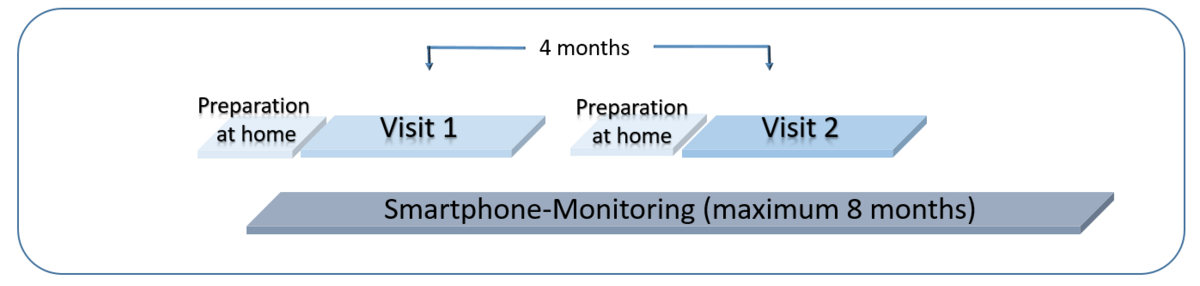
Data Collection via Questionnaire
Before visiting the study center, participants received a questionnaire by mail to assess their known infection status and the impact of the pandemic on their lives. Participants were asked to complete the questionnaire at home and bring it with them to their appointment at the study center. The questionnaire covers the following topics:
- Known infection with the coronavirus (SARS-CoV-2) / COVID-19 illness
- Personal information (e.g., age and gender)
- Current complaints / symptoms (e.g., shortness of breath and cough)
- Specific questions about the coronavirus (e.g., previous test results, travel, and social contacts)
- Expectations and opinions regarding a coronavirus infection
- Well-being (e.g., perceived impairments, concerns, fears, and interests)
- Emotional regulation
- Changes in employment
Collection of a stool sample
Participants received a stool sample kit by mail and are asked to bring a stool sample to their first appointment (for testing for antibodies against SARS-CoV-2).
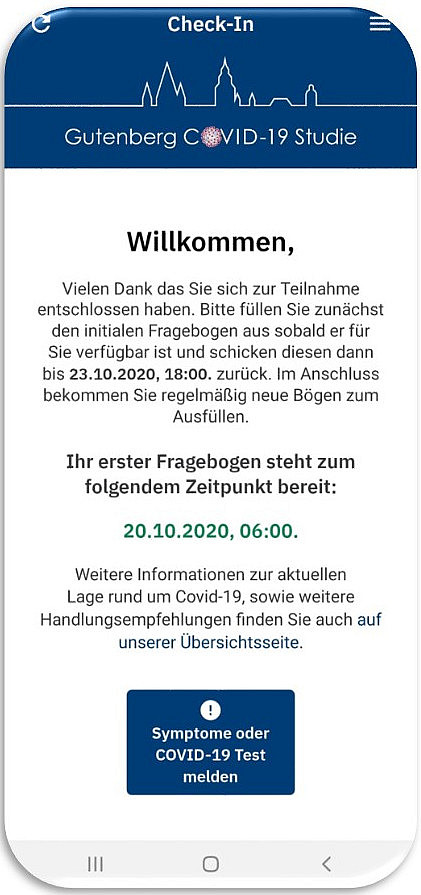
From the first study visit onwards, participants' health status was continuously monitored using the Gutenberg COVID-19 App, which was specifically developed for the study. The app did not replace the Corona-Warn-App provided by the Robert Koch Institute. When using the app for the first time, participants were asked to provide information on the following topics:
- Current symptoms
- Specific questions regarding COVID-19 (e.g. test results, travel, contacts)
- Social situation and lifestyle
During subsequent assessments via the app, participants were asked to:
- report current symptoms and
- answer specific questions regarding COVID-19.
If participants had no coronavirus infection or COVID-19-like symptoms, they were contacted once a week via the app. If participants reported an infection or the occurrence of COVID-19-like symptoms, they were contacted via the app every two days until there were no longer any signs of an acute infection. Participation without using the app was also possible.
The app is connected to the Gutenberg Health Hub (GHH), an initiative of the University Medical Center of Johannes Gutenberg University Mainz dedicated to promoting digitalization in medicine.
More Information about the Gutenberg Health Hub
All study participants who had given their consent were surveyed again one year after the follow-up visit to gather further information on the long-term effects of the pandemic and SARS-CoV-2 infection.
Selection of Participants
Voluntary enrollment in the study was not possible. Participants were selected at random and invited in writing to participate. This procedure ensured a representative sample of the population.
Benefits of Participation
Participants were tested for a current or past SARS-CoV-2 infection using throat swabs and antibody tests. The test results were sent promptly by mail. If an acute infection was confirmed, participants were also notified by phone. Through their participation, study participants made an important contribution to research on the spread of SARS-CoV-2, the identification of at-risk groups, and a better understanding of the potential long-term effects of infection. The findings also help to further develop strategies for dealing with future pandemics.
Study Center
The examinations took place at a specially established study center in downtown Mainz.
Participation Without a Smartphone
Use of the Gutenberg COVID-19 app was voluntary and not a prerequisite for study participation. Full participation in the study was possible even without a smartphone or the app installed.