Diversity of GABAergic circuits in health and disease
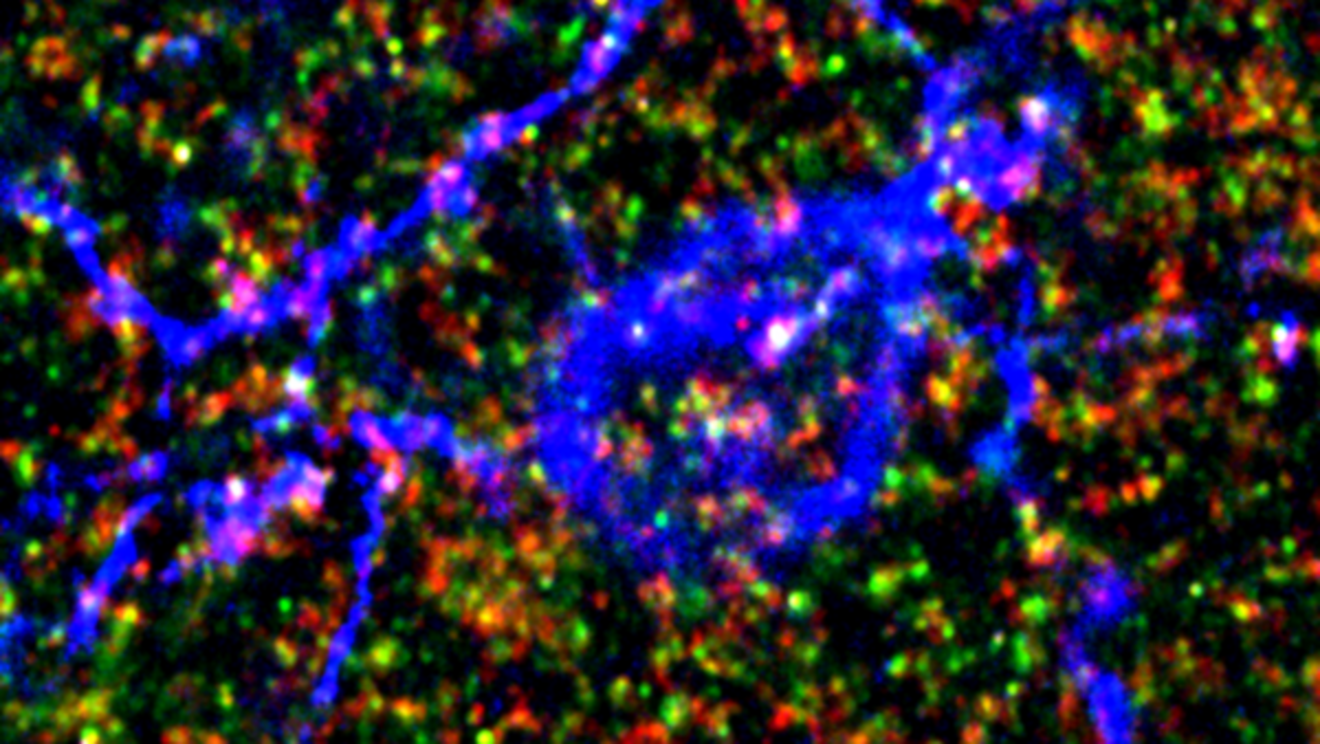
GABAergic circuits regulate information flow in the brain and thereby shape behavior. Disruptions in GABAergic signaling occur in numerous psychiatric and neurological disorders. Although GABA(A) receptors are already targeted pharmacologically, many available drugs act broadly throughout the central nervous system and therefore cause relevant side effects.
Our research group investigates the molecular diversity of GABAergic synapses. These synapses differ depending on brain region and neuronal subtype, potentially enabling more selective therapeutic approaches. By combining molecular, functional, and behavioral studies in mouse models, we aim to identify circuit-specific targets. Our main focus is on GABAergic synapses in the amygdala, hippocampus, and prefrontal cortex and their roles in anxiety and social behavior.
Current Projects
Molecular diversity of GABAergic synapses
![[Translate to Englisch:] Projektbild und Portrait](/fileadmin/kliniken/anatzellbio/Mikkel_Anatomie/Projektbilder_mit_Portraits/Tamara.svg)
Neuroligin-2 Functions Across GABAergic Synapse Subtypes
Tamara Ritter, M.Sc.
I investigate the brain region and synapse subtype-specific functions of the transsynaptic adhesion protein Neuroligin-2 (Nlgn-2) at GABAergic synapses in the mouse brain. To do so, I combine electrophysiological recordings with optogenetic stimulation of different GABAergic cell types expressing Channelrhodopsin.
![[Translate to Englisch:] Projektbild und Portrait](/fileadmin/kliniken/anatzellbio/Mikkel_Anatomie/Projektbilder_mit_Portraits/Kyra.svg)
Mapping Drug Sensitivity Across GABAergic Synapses
Kyra Sohns, PhD
Synapses are where nerve cells communicate; the balance between excitatory and inhibitory signalling is essential for healthy brain function. Inhibitory GABAergic synapses come in many varieties, defined by both the presynaptic neuron and postsynaptic protein composition. Yet, how this postsynaptic diversity shapes circuits relevant to psychiatric disorders remains poorly understood. Here, we ask whether existing GABAergic drugs act selectively on specific synaptic subtypes in the mouse prefrontal cortex. Combining electrophysiology, viral labelling, and immunohistochemistry, we aim to build a map of inhibitory synaptic composition allowing us to pave the way for more targeted therapies with fewer side effects.
![[Translate to Englisch:] Projektbild mit Portrait](/fileadmin/kliniken/anatzellbio/Mikkel_Anatomie/Projektbilder_mit_Portraits/Sowbi.svg)
Molecular Drivers of GABAergic Synaptic Dysfunction
Sowbarnika Ravichandran, M.Sc.
My research investigates the molecular mechanisms underlying inhibitory synaptic dysfunction, with a particular focus on Neuroligin-2 and gephyrin organization at GABAergic synapses. I use advanced confocal imaging and three-dimensional reconstruction to characterize Nlgn2 knockout mediated gephyrin aggregates across brain regions and identify their cellular and subcellular localization. Using mutational analysis, I investigate molecular determinants of gephyrin aggregation, while TurboID-based proximity labelling and proteomic approaches are used to characterize associated protein networks. By integrating neuroanatomical, molecular, imaging, and proteomic approaches, my work aims to understand how altered inhibitory synaptic organization contributes to neuronal dysfunction and behavioral abnormalities.
Diversity in corticolimbic GABAergic circuits
![[Translate to Englisch:] Marina Projektbild mit Portrait](/fileadmin/kliniken/anatzellbio/Mikkel_Anatomie/Projektbilder_mit_Portraits/Marina.svg)
VIP Neurons Selectively Regulate Fear Circuits
Marina Taylor, M.Sc.
This project aims to determine the contribution of VIP-expressing neurons to behaviours relevant to psychiatric disorders. Although relatively sparse, VIP⁺ neurons can exert substantial influence over neuronal circuits. To investigate this, we examined the effects of sustained VIP⁺ neuron manipulation across corticolimbic regions. Our findings revealed a strikingly region- and behaviour-specific profile: only sustained manipulation of mPFC VIP⁺ neurons impaired behaviour, exclusively in fear-related domains, without affecting social or anxiety-like behaviours. These findings highlight mPFC VIP⁺ neurons as selective regulators of fear circuits and potential translational targets.
Mapping Long-Range GABAergic Inputs to the CeM
Diego Pascual Cuadrado, PhD
Inhibitory GABAergic neurons are essential for regulating neural activity and are strongly implicated in psychiatric disorders. The centromedial amygdala (CeM), a key region involved in fear, stress, motivation, and social behavior, contains a particularly high density of GABAergic neurons. Previous work suggests that GABAergic synapses in the CeM may represent promising therapeutic targets for anxiety disorders. However, it remains unclear whether these synapses originate from local neurons within the CeM or from long-range GABAergic projections arising in other brain regions. This project aims to identify all long-range GABAergic inputs to the CeM and determine their functional roles in anxiety-related and social behavior.
GABAergic system in disease
![[Translate to Englisch:] Projektbild und Portrait](/fileadmin/kliniken/anatzellbio/Mikkel_Anatomie/Projektbilder_mit_Portraits/Juliette.svg)
Early-life stress, microglia, and inhibitory circuits
Juliette Soubra, M.Sc.
The aim of this PhD project is to study the role of microglia in the development of psychiatric diseases following early life stress, focusing on inhibitory synapses. To address this question, immunohistochemistry, electrophysiological recordings with optogenetics and chemogenetic activation of specific cell types will be used on a mouse model of early life stress.
Aircraft Noise, Pollution, and Brain-Heart Development
Yami George, M.Sc.
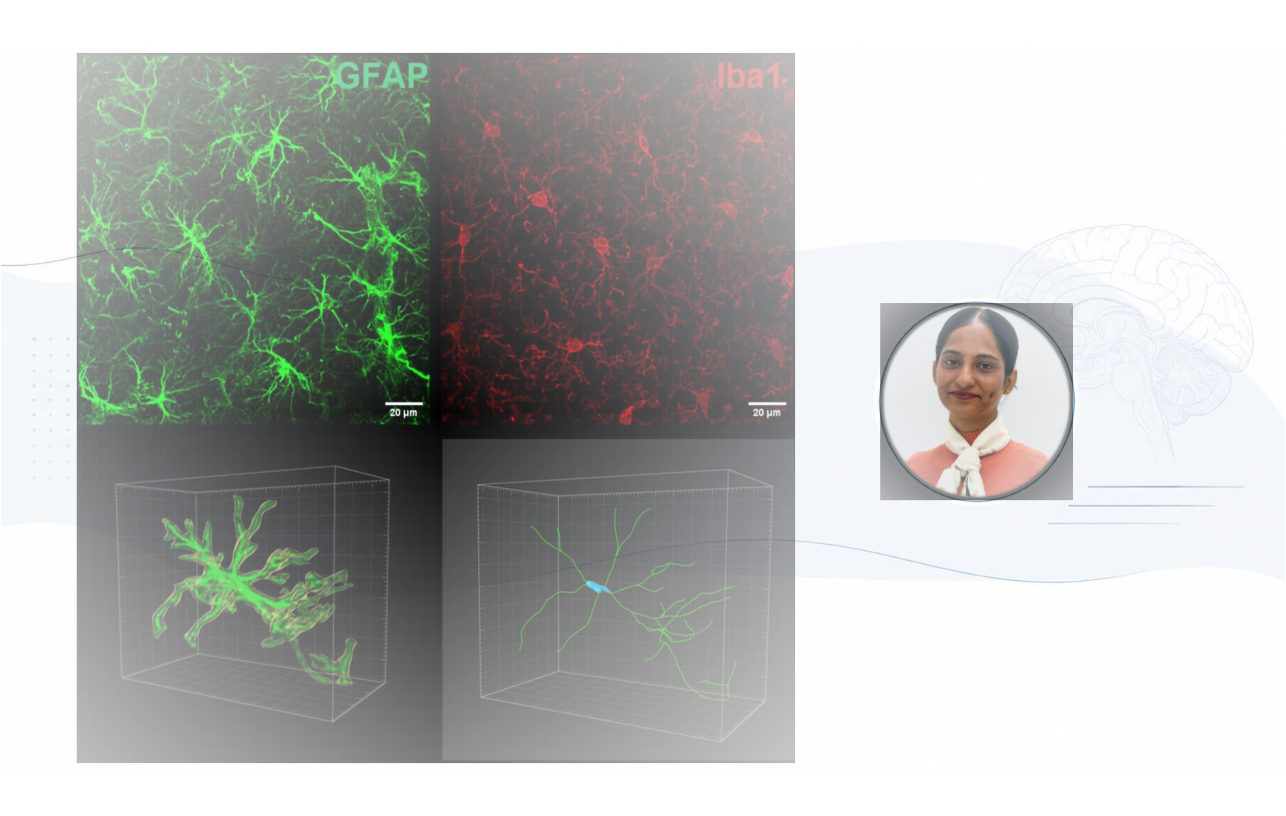
Aircraft noise and air pollution are increasingly linked to harmful effects on both the brain and the cardiovascular system. This project explores how exposure to aircraft noise and ultrafine particles can influence brain development, inflammation, neuronal communication, and the connection between the brain and heart. By studying these effects in experimental models, we aim to better understand who may be most vulnerable and identify biological pathways that could help guide future prevention and treatment strategies.
GABAergic Neurons and TDP-43 in Neurodegeneration
Ignacio Alcaide Agundez, M.Sc.
TDP-43 is an important regulator of neuronal RNA metabolism and is closely linked to amyotrophic lateral sclerosis (ALS) and frontotemporal dementia (FTD). In these diseases, TDP-43 can mislocalize from the nucleus to the cytoplasm and form pathological accumulations. This project investigates how TDP-43 pathology affects GABAergic neurons and how phosphorylation influences TDP-43 localization and neuronal dysfunction. Using neuronal cultures, mouse models, viral gene delivery, imaging, and molecular analyses, the study aims to identify early mechanisms of TDP-43 pathology and provide insights that may support the development of new therapeutic strategies for ALS and FTD.