Research Group Häuser – Personalized molecular diagnostics
Background
Many diseases that are diagnosed or monitored using molecular genetic techniques are considered rare diseases. Commercial testing methods for these diseases either do not exist, cannot be adequately tailored to individual patients' needs, or lack sufficient analytical sensitivity. Apart from variant detection, the classification of these often numerous variants of an individual and the prediction of their clinical significance are also relevant for diagnosis. To date, this has been insufficiently addressed in molecular genetic diagnostics.
Projects
Project 1
Characterization of NMD-associated variants causing monogenic diseases
Many metabolic disorders have a characteristic phenotype and indicative biomarkers. Knowledge of the significance of the detected genetic variants is essential for establishing a definitive diagnosis, assessing the phenotype, and providing genetic counseling. This assessment is difficult in the case of splice variants, for example, because the resulting RNA eludes characterization due to degradation. By inhibiting the nonsense-mediated decay of RNA, it can be analyzed to assess the consequences of genetic variants for the individual patient. This can be done, for example, using individualized long-read sequencing or digital PCR.
Project 2
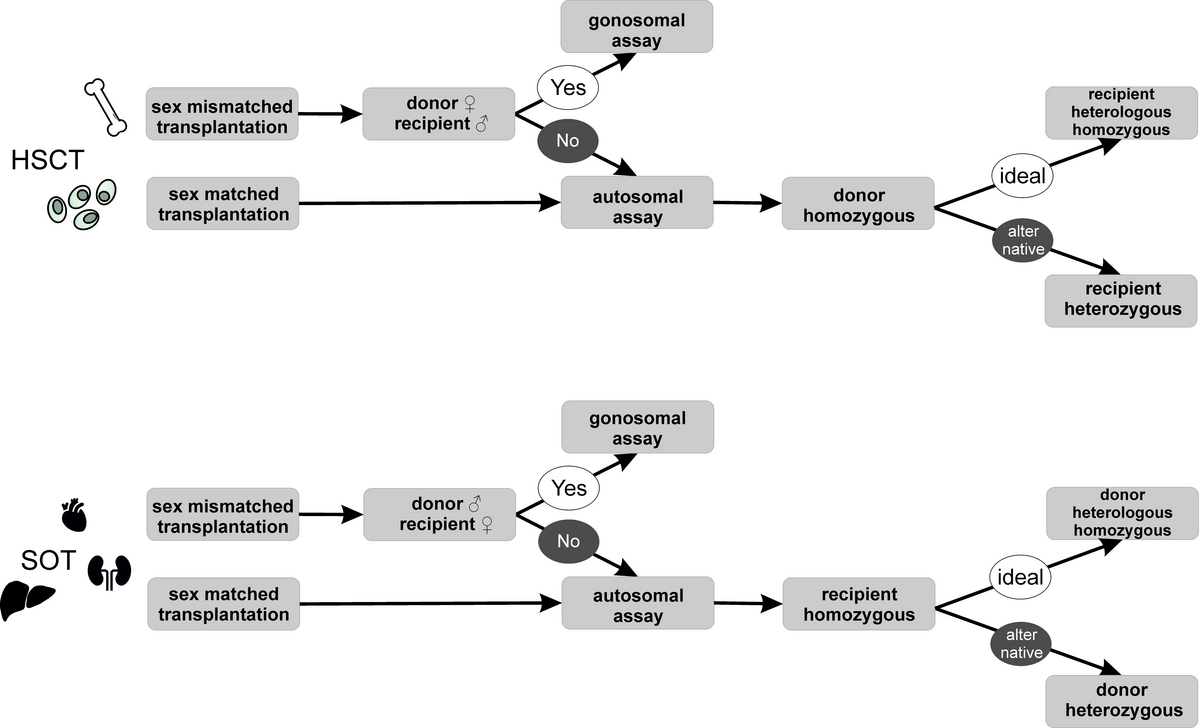
Digital droplet PCR for highly sensitive chimerism monitoring
After transplant, the recipient becomes a chimera. The ratio of the graft DNA to the recipient’s DNA provides insight into the engraftment of the transplant and the integrity of the organ. This holds true regardless of whether the transplant involves stem cells or solid organs.
We have developed a sensitive ddPCR-based testing system that is applicable to both forms of transplantation and can work with genomic DNA as well as cell-free DNA or DNA from other bodily fluids and purified cells. The significance of minimal changes in the ratio of graft-to-recipient DNA—changes that cannot be detected by conventional systems—is the focus of our current research.
Project 3
NGS-based characterization of patients with red cell membrane disorders
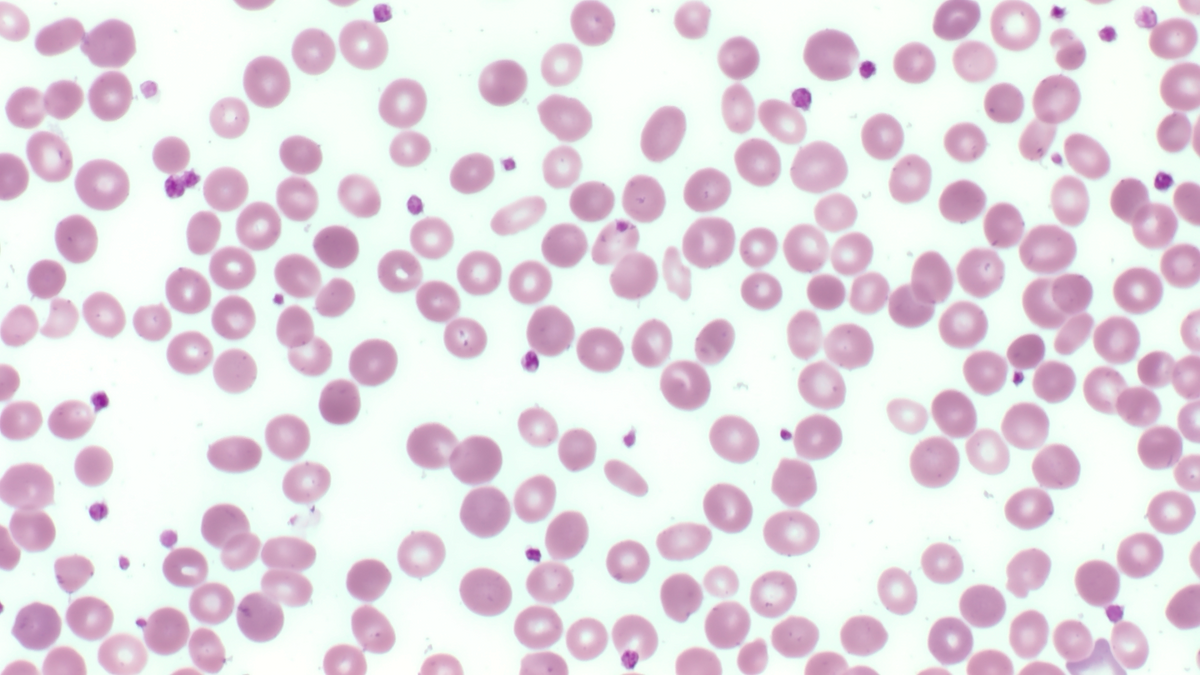
Membranopathies are disorders of the horizontal or vertical skeleton of the erythrocyte membrane, with hemolysis as their primary symptom. Defects in the membrane lead to reduced mechanical integrity or to the loss of the membrane or membrane cohesion. The loss of surface area results in small, spherical, hemoglobin-filled red blood cells known as spherocytes. These cells gave hereditary spherocytosis its name. The spherocytes are sorted out in the spleen and phagocytosed by the reticuloendothelial system. The severity of the disease depends on the extent of membrane loss. Symptoms range from an asymptomatic course to severe neonatal or prenatal hemolysis.
The molecular causes of membranopathies vary, as do their treatment options. We attempt to identify these causes using various sequencing techniques and functional tests.
Publications
- Häuser F, Rossmann H, Adenaeuer A, et al. Hereditary Spherocytosis: Can Next-Generation Sequencing of the Five Most Frequently Affected Genes Replace Time-Consuming Functional Investigations?. Int J Mol Sci. 2023;24(23):17021. Published 2023 Nov 30. doi:10.3390/ijms242317021
- Abdel-Salam GMH, Hellmuth S, Gradhand E, et al. Biallelic MAD2L1BP (p31comet) mutation is associated with mosaic aneuploidy and juvenile granulosa cell tumors. JCI Insight. 2023;8(22):e170079. Published 2023 Nov 22. doi:10.1172/jci.insight.170079
- Häuser F, Mittler J, Hantal MS, et al. One fits all: a highly sensitive combined ddPCR/pyrosequencing system for the quantification of microchimerism after hematopoietic and solid organ transplantation. Clin Chem Lab Med. 2023;61(11):1994-2001. Published 2023 May 11. doi:10.1515/cclm-2023-0198
- Nuzhat N, Van Schil K, Liakopoulos S, et al. CEP162 deficiency causes human retinal degeneration and reveals a dual role in ciliogenesis and neurogenesis. J Clin Invest. 2023;133(8):e161156. Published 2023 Apr 17. doi:10.1172/JCI161156
- Jurk K, Adenaeuer A, Sollfrank S, et al. Novel GATA1 Variant Causing a Bleeding Phenotype Associated with Combined Platelet α-/δ-Storage Pool Deficiency and Mild Dyserythropoiesis Modified by a SLC4A1 Variant. Cells. 2022;11(19):3071. Published 2022 Sep 29. doi:10.3390/cells11193071
- Häuser F, Sprinzl MF, Dreis KJ, et al. Evaluation of a laboratory-based high-throughput SARS-CoV-2 antigen assay for non-COVID-19 patient screening at hospital admission. Med Microbiol Immunol. 2021;210(2-3):165-171. doi:10.1007/s00430-021-00706-5
- Müller-Calleja N, Hollerbach A, Royce J, et al. Lipid presentation by the protein C receptor links coagulation with autoimmunity. Science. 2021;371(6534):eabc0956. doi:10.1126/science.abc0956
- Häuser F, Gökce S, Werner G, et al. A non-invasive diagnostic assay for rapid detection and characterization of aberrant mRNA-splicing by nonsense mediated decay inhibition. Mol Genet Metab. 2020;130(1):27-35. doi:10.1016/j.ymgme.2020.03.002
- Häuser F, Rossmann H, Laubert-Reh D, et al. Inflammatory bowel disease (IBD) locus 12: is glutathione peroxidase-1 (GPX1) the relevant gene?. Genes Immun. 2015;16(8):571-575. doi:10.1038/gene.2015.35
- Häuser F, Deyle C, Berard D, et al. Macrophage-stimulating protein polymorphism rs3197999 is associated with a gain of function: implications for inflammatory bowel disease. Genes Immun. 2012;13(4):321-327. doi:10.1038/gene.2011.88
Other publications by PD Dr. rer nat. Friederike Häuser
Research Group Leader

PD Dr. rer. nat. Friederike Häuser
Research Group Members

Kim Dreis
Topic: Development of an assay for detecting the genetic causes of pancreatitis
Student (B. Sc. Med. Biotechnologie)
Arjeta Isufi
Topic: Long-read sequencing for the detection and characterization of cryptic splice variants
Student (M.Sc. Biologie)
Collaboration partner
- PD Dr. med. Olaf Beck, Schwerpunktbereich Pädiatrische Hämatologie, Department of Pediatrics and Adolescent Medicine
- Dr. med. Oliver Kriege, Hämatologie und Medizinische Onkologie, III. Department of Internal Medicine