Research Group Rossmann – Advanced Diagnostics
Background
Our aim is to establish innovative genetic diagnostic concepts for various diagnostically challinging or rare conditions. To this end, we are developing new molecular diagnostic tools to bridge the gap between basic science, clinical research, routine diagnostics and patient care. The core focus is the analysis of selected genes using whole-exome sequencing, Sanger sequencing, pyrosequencing, MLPA (detection of large deletions and insertions), fragment analysis via capillary electrophoresis (repeat or homopolymer regions), digital PCR (sensitive allele quantification or quantitative expression analysis), and splicing studies (with and without NMD inhibition using dPCR or nanopore sequencing).
Projects
Project 1 - Defects of the aPTT and the Kallikrein-Kininogen-System
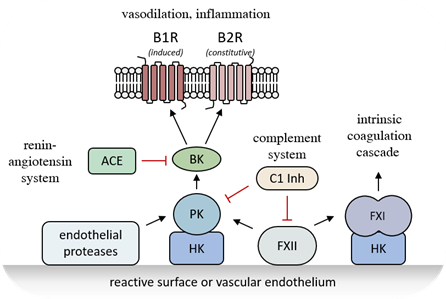
1. International Registry and Biobank for Congenital Defects of the Kallikrein-Kininogen System
This project aims to provide important insights into the physiological and pathophysiological significance of Prekallikrein (PK) and High molecular weight kininogen (HK), which will help improve care for patients with these deficiencies and advance the development of PK- and HK-based therapeutic options. Due to the absence of obvious symptoms of deficient patients and the previously mistaken assumption that these protein defects are rare, a comprehensive, well-structured, international cohort study of deficient cases is missing. Therefore, we have established an international registry and biobank for congenital defects of the kallikrein-kininogen system, and offer participating centers free functional and molecular genetic PK and HK testing.
2. Molecular characterization of historic KKS-deficient samples
Deficiencies of the plasma protease zymogen prekallikrein (PK) and its substrate, high molecular weight kininogen (HK), were discovered in 1965 and 1975, respectively. Initially, they were referred to as Fletcher and Fitzgerald traits after the first patients identified. Due to technical progress and new scientific insights, we are now able and plan to sequence and reevaluate cell-free DNA from these historic plasma samples using pyro- and next generation sequencing techniques to gain new insights into the molecular mechanism of PK an HK deficiency and to improve the spectrum of known variants.
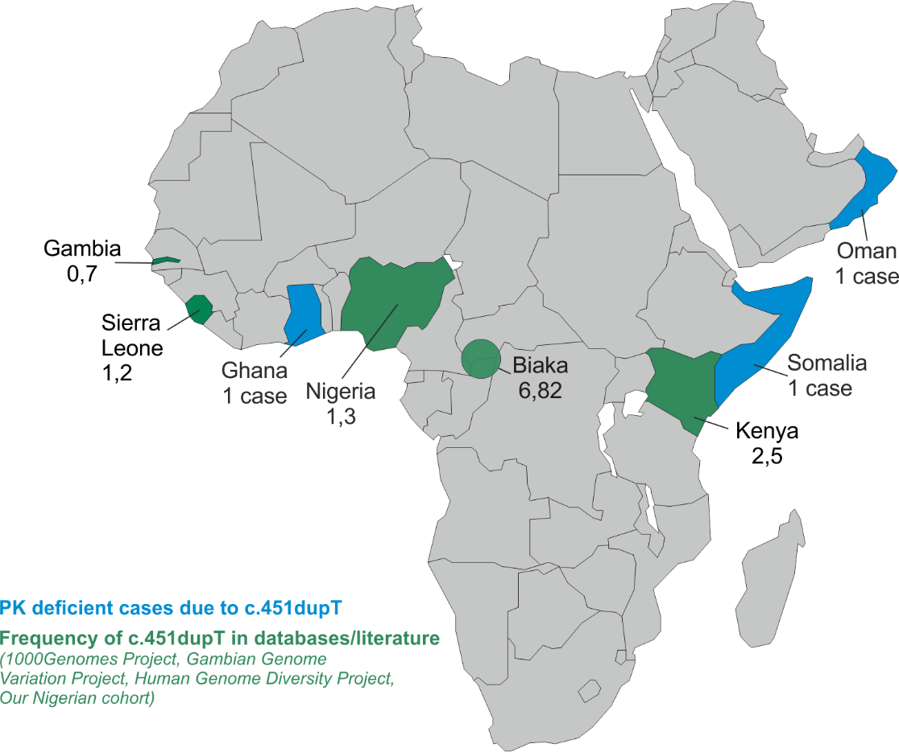
3. Search for heterozygote advantage of PK- and HK-deficiency
In previous publications, we have shown that PK deficiency—and, to a lesser extent, HK deficiency—is widespread in sub-Saharan West Africa, and that causative mutations occur frequently, with a MAF of ~1.7%. Since PK and HK operate at the interface between the immune and coagulation systems, it stands to reason that heterozygous variants could confer an evolutionary advantage against infectious diseases.
Project 2 - Advancment and improvement of molecular diagnostics
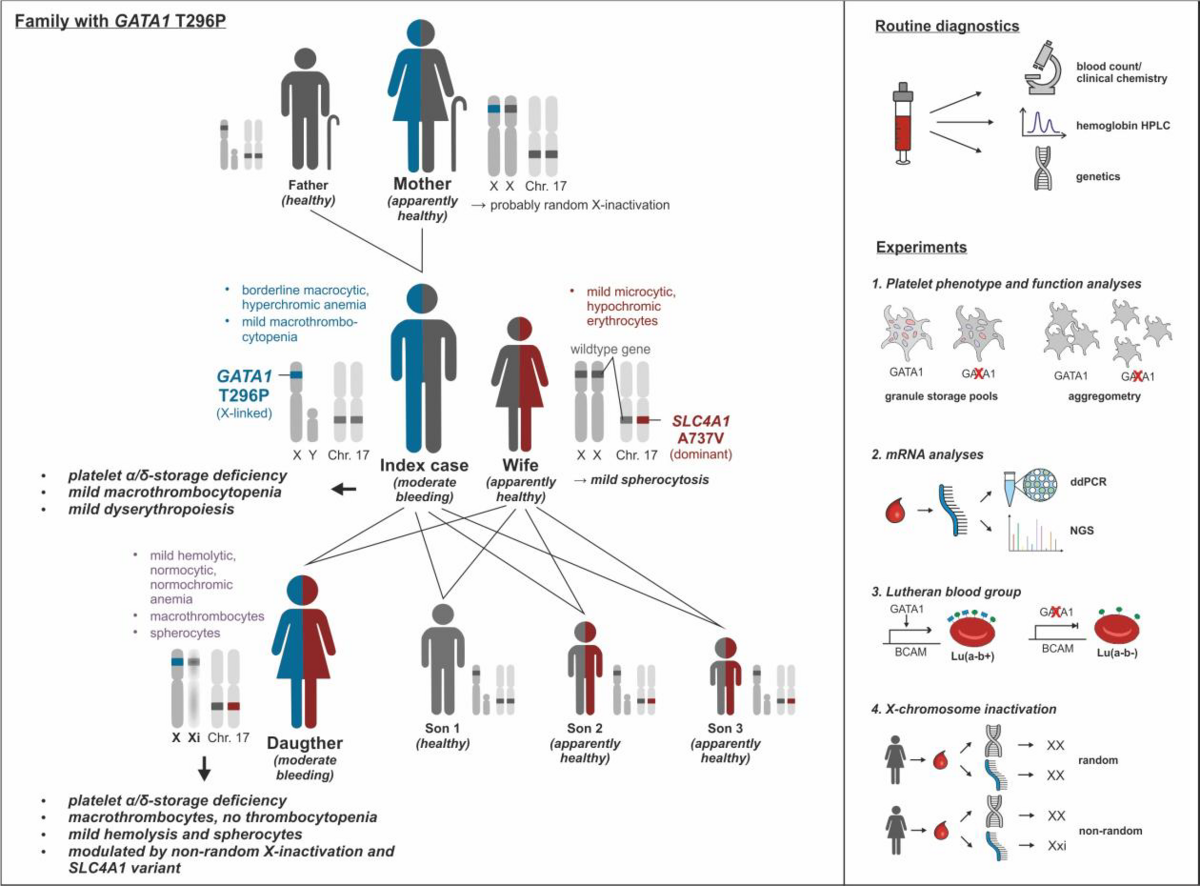
1. Platelet dysfunction
Hereditary platelet disorders encompass a broad spectrum of many different conditions with diverse clinical presentations, which complicates diagnosis and often leads to undiagnosed or misdiagnosed cases, particularly in cases with rarer manifestations. What they all have in common, however, is a more or less pronounced tendency to bleed due to impaired primary hemostasis. In a laboratory setting, platelet analysis are challeging due to high instability and the need for highly specialized equipment.
In collaboration with Prof. Jurk from the CTH, we are able to analyze platelets using lumiaggregometry, flow cytometry, specialized ELISA tests, and molecular genetic analysis, to detect both quantitative and qualitative defects in the α-and δ-granules of patients who exhibited spontaneous or (post-)operative bleeding tendencies due to defect primary hemostasis. Elucidating the underlying causes of these platelet defects will close the diagnostic gap and contribute to a better understanding of the genetic causes of defects in the α- and δ-granules as well as their pathobiochemical effects on platelet signatures.
2. Spherocytosis and hemoglobinopathies
Red blod cell membranopathies are a rare condition. The molecular causes of membranopathies vary, as do their treatment options. In an collaborative research project we attempt to identify these causes using various sequencing techniques and functional tests. For more information about this project, please visit the Häuser research group website.
3. Endocrine tumor syndromes
The goal of genetic testing for endocrine tumor syndromes is to detect disease-causing mutations at an early stage, identify at-risk individuals within a family, and initiate appropriate preventive and therapeutic measures. From a scientific perspective, it is important to understand which genetic changes influence tumor development and how personalized therapy might be designed. Our focus here is primarily on different types of multiple endocrine neoplasia and pheochromocytoma.
4. Genetic basis of cystic fibrosis, hereditary pancreatitis, primary ciliary dyskinesia
In this project, we investigate the genetic causes of diseases that lead to impaired transport or altered composition of mucosal secretions and, as a result, to functional problems in the lungs, pancreas, and intestines. These diseases are cystic fibrosis, hereditary pancreatitis, primary ciliary dyskinesia (PCD). These conditions share a significant overlap in the potentially affected genes (like CFTR), and a genetic analysis is essential to ensure an accurate diagnosis and helps to assess treatment options. Click here to see an example project.
Project 3 - Von Willebrand disease and ADAMTS13 deficiency
In collaboration with the Falter research group and Charis von Auer from the Hemostasis outpatient clinic of the Mainz University Medical Center, we have established a registry study on thrombotic thrombocytopenic purpura (TTP) to better understand the course of the disease and identify potential diagnostic markers. We are also investigating the diverse genetic aspects of von Willebrand syndrome.
For more information about our institutes research on TTP and other thrombotic microangiopathies, please visite the website of the Falter research group. A TTP registry at Mainz University Medical Center is still maintained here.
Publications
- Adenaeuer A, Barco S, Trinchero A, et al. Severe high-molecular-weight kininogen deficiency: clinical characteristics, deficiency-causing KNG1 variants, and estimated prevalence. J Thromb Haemost. 2023;21(2):237-254. doi:10.1016/j.jtha.2022.11.011
- Häuser F, Rossmann H, Adenaeuer A, et al. Hereditary Spherocytosis: Can Next-Generation Sequencing of the Five Most Frequently Affected Genes Replace Time-Consuming Functional Investigations?. Int J Mol Sci. 2023;24(23):17021. Published 2023 Nov 30. doi:10.3390/ijms242317021
- Falter T, Rossmann H, de Waele L, et al. A novel von Willebrand factor multimer ratio as marker of disease activity in thrombotic thrombocytopenic purpura. Blood Adv. 2023;7(17):5091-5102. doi:10.1182/bloodadvances.2023010028
- Häuser F, Mittler J, Hantal MS, et al. One fits all: a highly sensitive combined ddPCR/pyrosequencing system for the quantification of microchimerism after hematopoietic and solid organ transplantation. Clin Chem Lab Med. 2023;61(11):1994-2001. Published 2023 May 11. doi:10.1515/cclm-2023-0198
- Jurk K, Adenaeuer A, Sollfrank S, et al. Novel GATA1 Variant Causing a Bleeding Phenotype Associated with Combined Platelet α-/δ-Storage Pool Deficiency and Mild Dyserythropoiesis Modified by a SLC4A1 Variant. Cells. 2022;11(19):3071. Published 2022 Sep 29. doi:10.3390/cells11193071
- Kangro K, Roose E, Joly BS, et al. Anti-ADAMTS13 autoantibody profiling in patients with immune-mediated thrombotic thrombocytopenic purpura. Blood Adv. 2021;5(17):3427-3435. doi:10.1182/bloodadvances.2020004172
- Falter T, Rossmann H, Menge P, et al. No Evidence for Classic Thrombotic Microangiopathy in COVID-19. J Clin Med. 2021;10(4):671. Published 2021 Feb 9. doi:10.3390/jcm10040671
- Adenaeuer A, Ezigbo ED, Fawzy Nazir H, et al. c.451dupT in KLKB1 is common in Nigerians, confirming a higher prevalence of severe prekallikrein deficiency in Africans compared to Europeans. J Thromb Haemost. 2021;19(1):147-152. doi:10.1111/jth.15137
- Häuser F, Gökce S, Werner G, et al. A non-invasive diagnostic assay for rapid detection and characterization of aberrant mRNA-splicing by nonsense mediated decay inhibition. Mol Genet Metab. 2020;130(1):27-35. doi:10.1016/j.ymgme.2020.03.002
- Barco S, Sollfrank S, Trinchero A, et al. Severe plasma prekallikrein deficiency: Clinical characteristics, novel KLKB1 mutations, and estimated prevalence. J Thromb Haemost. 2020;18(7):1598-1617. doi:10.1111/jth.14805
Other publications by Prof. Dr. med. Heidi Rossmann
Research Group Leader

Prof. Dr. med. Heidi Rossmann
Research Group Members
Dr. rer. nat. Anke Adenäuer
Postdoc

Victor Ruf
Topic: Implementing modern molecular diagnostic approaches for routine diagnostics and consolidating processes – Development of dPCR and sequencing based methods
medizinischer Doktorand
MTLA
Collaboration partner
Internal (University Medical Center Mainz, Germany)
- PD. Dr. rer nat. Friederike Häuser, Research Group - Personalized molecular diagnostics, Institute for Clinical Chemistry and Laboratory Medicine
- PD Dr. rer nat. Tanja Falter, Research Group - Thrombotic microangiopathies, Institute for Clinical Chemistry and Laboratory Medicine
- Prof. Dr. Kerstin Jurk, Arbeitsgruppe 'Thrombozyten Physiologie und Dysfunktion', Centrum for Thrombosis and Hemostasis
- PD Dr. med. Christian Fottner, Director of the Outpatient Clinic for Endocrine and Neuroendocrine Tumors
- PD Dr. med. Olaf Beck, Schwerpunktbereich Pädiatrische Hämatologie, Department of Pediatrics and Adolescent Medicine
- Dr. med. Oliver Kriege, Hämatologie und Medizinische Onkologie, III. Department of Internal Medicine
- Dr. med. Charis von Auer, Hemostasis outpatient clinic, III. Department of Internal Medicine
External
- Prof. Dr. Bernhard Lämmle, Emeritus-Professor, CTH Unimedizin Mainz, Bern, Switzerland
- Prof. Dr. med. Stefano Barco, Department of Angiology, Zurich, Switzerland
- Dr. Alice Trinchero, Department of Medical Oncology and Hematology, Zurich, Switzerland
- Dr. Eyiuche D. Ezibgo, University of Nigeria, Nsukka, Nigeria